

Skip to the main content.

Green Leaf FV Recycling Favicon-1

FV Recycling is your all-in-one
industrial & commercial recycling solution.

Sign Up

Sign up for monthly notifications from FV Recycling to stay up-to-date on news, events, education and more.

Green Leaf FV Recycling Favicon-1

Cost Efficient. Green Effective.

7 min read

OCC Cardboard Quality: What's Accepted and What Gets Rejected

OCC Cardboard Quality: What's Accepted and What Gets Rejected
9:37

Good OCC comes down to three things: keep it clean, keep it dry, and keep non-cardboard material out of the bale. Loads that stay free of moisture, food residue, wax coatings, and plastic earn the best grade and the strongest rebate, while contaminated loads get downgraded or turned away at the dock. The fastest wins are covering your cardboard until pickup and baling it tight so it ships dense and sorted.


OCC - old corrugated cardboard, the brown shipping boxes nearly every business throws out - is one of the most valuable materials in the commercial waste stream when it's handled well. The catch is that "handled well" has a specific meaning at the recycling mill, and the gap between a clean load and a rejected one is smaller than most operations realize.

A single wet pallet of boxes or a bale packed with shrink wrap can drop a load from premium grade down to mixed paper, or get it bounced at the receiving dock. Here's what separates good OCC from the loads that come back to bite you.

What Does Good OCC Actually Look Like?

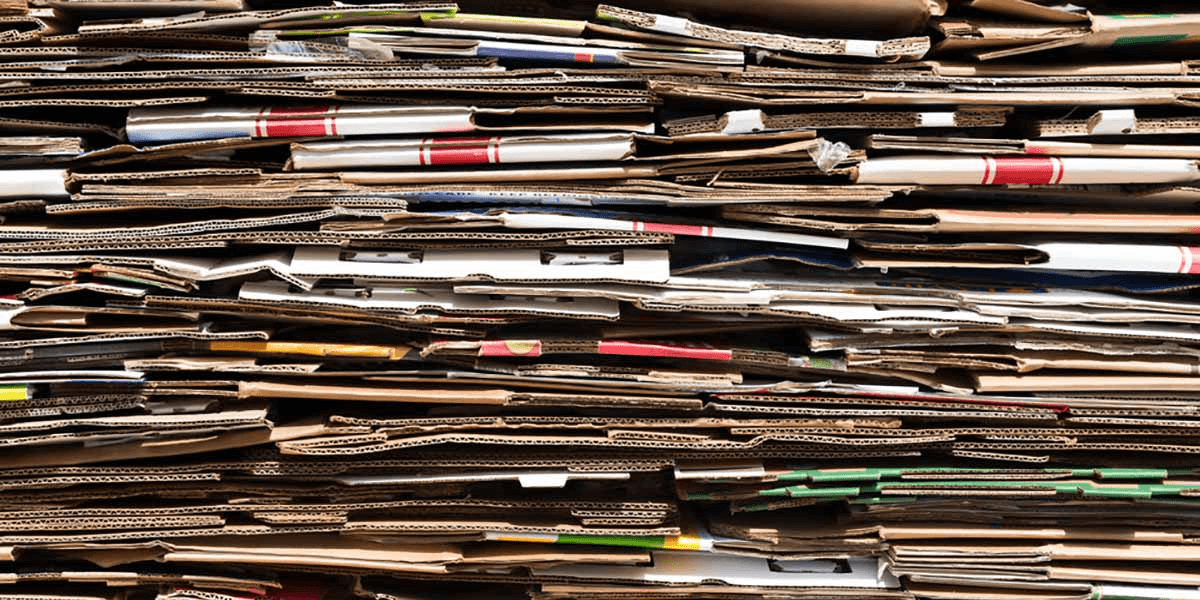
OCC (old corrugated cardboard) is the recycling industry's term for used corrugated boxes - the brown shipping cartons with a wavy fluted layer pressed between two flat sheets. Good OCC is clean, dry, corrugated box material with little to no contamination mixed in.

When we collect a load, the mill that buys it is grading for fiber quality. Corrugated boxes are prized because their long, strong fibers can be repulped and remade into new boxes again and again. What graders want to see is uniform corrugated material, free of moisture and free of anything that isn't cardboard. That means no plastic film, no foam, no food packaging, and no other paper grades muddled in.

It helps to know what isn't OCC. Cereal boxes, shoe boxes, and similar thin gray board are paperboard or chipboard, a different and lower-value grade. Wax-coated produce boxes are their own problem entirely. We keep these separated from your OCC so the corrugated stays high-grade. The cleaner and more consistent the load, the closer it lands to a premium grade - and the more it's worth when it reaches the buyer.

──────────────────────────────────────────────

💡 Learn more → If you want the mechanics of how loose boxes become a marketable bale, our breakdown of how a cardboard baler works walks through it.

──────────────────────────────────────────────

Get more from every bale of cardboard. Talk to a recycling expert!

What Gets OCC Cardboard Rejected or Downgraded?

Cardboard gets rejected or downgraded when contamination pushes a load past the mill's tolerance - and most contamination is preventable at the source. Buyers measure quality against a threshold, and once a load crosses it, it drops to a lower grade like mixed paper or gets refused outright.

A few culprits cause the vast majority of problems. The good news is they're easy to spot once your team knows what to watch for.

The pattern is simple: anything that isn't clean, dry corrugated material works against you. When a recycler turns a material away, you still have options - we cover what those realistically look like in our recycler won't accept a material.

How Does Moisture Affect Cardboard Recycling?

Moisture is the single most common reason a cardboard load loses value, because water both inflates the weight dishonestly and damages the fiber the mill is paying for. A soaked load might look heavier on the scale, but buyers test for it and dock the price accordingly - or send it back.

Wet cardboard is a problem on three fronts.

  1. The added water weight distorts what's actually being bought and sold, and mills price around that.

  2. Moisture starts breaking down corrugated fiber almost immediately, weakening exactly the property that makes OCC valuable.

  3. Damp bales sitting in storage grow mold, which can spoil neighboring material and create a handling issue long before the load ever ships.

The fix is mostly about storage discipline. Keep cardboard indoors or under cover, off bare ground, and bale it promptly rather than letting loose boxes sit out where rain or dock spray can reach them. For multi-site operations, a covered, designated staging area does more to protect rebate value than almost any other single change. Dry in, dry out - that's the standard worth holding your locations to.

Does a Cardboard Baler Improve OCC Quality?

Yes - a cardboard baler compresses loose boxes into dense, uniform bales that ship more efficiently, store more cleanly, and command a stronger grade than loose or loosely bundled cardboard. Mills consistently value baled OCC higher than the same material thrown loose into a dumpster.

The quality gain comes from a few places at once. Baling forces your team to flatten and feed in cardboard deliberately, which naturally screens out the foam, film, and trash that ends up in open bins. A tight bale also protects the material - it's harder for a banded bale to absorb moisture or get fouled than a loose pile. And from a logistics standpoint, dense bales mean you ship more fiber per truck and pay less per ton to move it.

Choosing the right machine matters, though. A baler sized wrong for your volume creates as many headaches as it solves, which is why we walk facilities through baler versus compactor decisions before recommending equipment. If your existing baler is fighting you, jams are usually a contamination or maintenance signal - we cover the most common baler jams and fixes too.

──────────────────────────────────────────────

📦 We lease, sell, and buy balers and compactors. Size the options that fit your volume on our equipment page.

──────────────────────────────────────────────

How Does Cardboard Quality Affect Your Recycling Rebate?

Cardboard quality directly drives rebate value - cleaner, properly graded OCC earns a stronger rebate, while contaminated loads erode that return or flip it into a disposal cost. Quality isn't just an environmental nicety; it's the difference between cardboard being a revenue stream and being an expense.

Here's how the same volume of cardboard can land in very different places depending on condition:

Cardboard condition What happens at the mill

Clean, dry, well-baled OCC

The load grades near premium, ships efficiently, and earns the strongest available rebate for your volume.

Lightly contaminated or inconsistent

The load is accepted but downgraded toward mixed paper, so you capture a meaningfully lower rebate than the material could have earned.

Heavily contaminated or wet

The load may be rejected outright or routed to disposal, turning a potential rebate into hauling and tipping costs.

This is why we treat rebate and cost capture as two sides of the same coin. A program that looks fine on volume can still leak value if contamination is quietly dragging every load down a grade. Tracking quality over time tells you whether your locations are actually capturing the rebate they're capable of, and the EPA's recycling guidance is a useful baseline for staff on what belongs in the stream.

How Can You Keep Your OCC Clean?

Keeping OCC clean comes down to a simple, repeatable program: separate it, protect it, and bale it promptly. Most contamination isn't a recycling problem - it's a workflow problem that shows up at the dock.

A few habits do most of the work across a commercial waste management program:

  • Designate a cardboard-only area. Give OCC its own clearly marked staging space so it doesn't collect stray plastic, foam, or trash from nearby bins.
  • Keep it covered and dry. Store cardboard indoors or under cover and off the ground, since moisture is the easiest grade-killer to prevent.
  • Train staff on what's not cardboard. Stretch wrap, shrink wrap, foam, food packaging, and coated boxes should be pulled before anything goes in the baler.
  • Bale promptly and consistently. Don't let loose boxes pile up where they can get wet or mixed - feed them in regularly so material ships clean.
  • Audit what's actually leaving your dock. Spot-checking loads tells you where contamination is sneaking in so you can fix it at the source.

For multi-site operations, the challenge is consistency - what one location does well, another may quietly undo. A waste audit is the fastest way to see where quality is slipping and where the rebate opportunity actually sits.

Partner with FV Recycling for Your Cardboard Program

We help commercial and industrial operations turn cardboard from a cost into a return. Across the Southeast, Midwest, and Southwest, we run bale route hauling, lease, sell, and buy balers and compactors, and manage recycling programs for multi-site facilities - so your OCC ships clean, grades well, and earns what it should. If your loads are getting downgraded, your storage is letting moisture in, or you're not sure your current rebate reflects your real volume, we can audit it and build a program around the way your facilities actually work.

Reach out and we'll start with your volumes and your dock - not a sales pitch.

New call-to-action

Frequently Asked Questions

Sources

  • U.S. Environmental Protection Agency (EPA) - referenced in the rebate section for recycling guidance - https://www.epa.gov/recycle
  • ISRI - referenced in the "How is OCC graded" FAQ for the grade standards and double-sorted OCC definition