

Skip to the main content.

Green Leaf FV Recycling Favicon-1

FV Recycling is your all-in-one
industrial & commercial recycling solution.

Sign Up

Sign up for monthly notifications from FV Recycling to stay up-to-date on news, events, education and more.

Green Leaf FV Recycling Favicon-1

Cost Efficient. Green Effective.

5 min read

Recycling Contamination: The Fixes That Actually Stick

Recycling Contamination: The Fixes That Actually Stick
7:38

Contamination is the leading cause of recyclable material rejection in commercial and industrial programs. When it recurs after corrective action, the issue is almost always systemic — rooted in process gaps, inconsistent training, or equipment configuration — rather than isolated mistakes. 


This guide covers the most common contamination sources in OCC and commercial recycling programs and the fixes with the highest rate of lasting improvement.

New call-to-action

What Is Recycling Contamination and Why Does It Keep Recurring?

Recycling contamination occurs when non-recyclable materials (food waste, liquids, plastic film, or incompatible grades) are introduced into a recyclable stream, reducing market value and often triggering load rejection or landfill diversion.

The reason contamination recurs after corrective action is typically structural, not behavioral. One-time training sessions and signage updates address symptoms. What sustains contamination over time is the absence of a feedback loop between hauler rejection reports and floor-level operations. When a load gets rejected, that information rarely reaches the dock workers or supervisors responsible for material separation. Without that connection, the same contamination source repeats.

Additional recurring factors include:

  • High employee turnover in facilities without embedded sorting protocols
  • Inconsistent pickup schedules that create overflow conditions and encourage cross-stream mixing
  • Sorting decisions made under time pressure at the dock rather than at the point of generation
  • No designated ownership for recycling quality at the floor level

Industry reference point: Most OCC buyers set contamination thresholds between 2–5%.
Loads exceeding that threshold are subject to price deductions, material downgrading, or full rejection
depending on the buyer's policy and the severity of the contamination.

What Are the Most Common Contamination Sources in OCC and Cardboard Programs?

The most common contamination sources in commercial OCC and cardboard recycling programs are wet or food-soiled corrugated, non-OCC materials baled with cardboard, such as plastic film and foam, and the mixing of fiber grades that require separate collection streams.

In practice, these break down into four categories that account for the majority of commercial cardboard rejections:

What Operational Changes Reduce Contamination Most Quickly?

The operational changes that reduce contamination fastest are dedicated, clearly labeled collection points for each material stream, removal of general waste bins from recycling areas, and a direct feedback process that routes rejection reports back to floor supervisors within 24 hours.

These changes work because they address the decision-making environment rather than relying on individual behavior — when a waste bin sits next to a recycling station, cross-contamination is the predictable outcome regardless of training.

Additional high-impact adjustments:

  • Position recycling collection at the point of generation, not in a centralised location that requires material to be carried across the facility
  • Assign baler operators a material inspection role before each bale cycle — rejecting non-conforming material at this stage is far cheaper than a post-delivery load rejection
  • Establish consistent pickup schedules to prevent overflow — full bins and staging congestion are primary drivers of cross-stream contamination
  • Separate stretch wrap and plastic film from cardboard at the dock level with a dedicated, clearly marked container

Facilities unsure where contamination originates should complete an on-site audit before implementing changes.

Ready to Identify Contamination Sources Specific to Your Facility's Material Mix and Layout?


How Do You Train Employees So the Fix Actually Holds?

Employee training that prevents recycling contamination long-term focuses on visual identification of acceptable vs. unacceptable materials, clear ownership at each stage of the material stream, and regular reinforcement tied to real rejection data from the facility's own program.

One-time training sessions produce short-term improvement — contamination rates typically return to baseline within four to six weeks because the underlying conditions remain unchanged.

Training that holds shares these characteristics:

  • Role-specific instruction for dock workers, warehouse staff, and supervisors based on their point of contact with the material stream
  • Uses the facility's own rejection data and disposal cost figures — employees respond to numbers that reflect their specific operation
  • Acceptable materials lists posted at every collection point and reviewed as part of new hire onboarding
  • A named individual at the floor level holds accountability for recycling quality
  • Hauler rejection reports are reviewed with the relevant team within a defined timeframe — not filed and forgotten

How Do You Know Whether Contamination Has Actually Been Resolved?

Contamination reduction is confirmed through consistent load acceptance at the buyer, a measurable decline in rejection notices over a 60–90 day period, and stable or improving material grade designations on settlement reports.

Contamination rates often drop immediately after a corrective action and then return to baseline as attention shifts. A 90-day window of consistent load acceptance is a more reliable indicator of systemic improvement than a short-term reduction in rejections.

Key metrics to track:

  • Rejection rate - percentage of loads rejected or downgraded per month over a rolling 90-day period
  • Material grade consistency - whether settlement reports show stable OCC grade or increasing mixed-grade designations
  • Hauler feedback frequency - contamination notices or complaints per pickup cycle
  • Disposal cost trend - rising landfill costs alongside recycling activity indicate unresolved contamination

When metrics show contamination persists despite operational changes, a formal recycling program audit is the appropriate next step.

How Can FV Recycling Help?

FV Recycling works with commercial and industrial facilities to diagnose contamination issues at the source and build recycling programs that maintain material quality over time. 

FV's services directly address the operational conditions that drive recurring contamination:

  • Consistent bale route hauling schedules prevent the overflow conditions that lead to cross-stream mixing
  • Brokerage services provide access to alternative buyers for downgraded or mixed-grade material that standard recyclers reject outright
  • Customizable programs are built around a facility's actual material mix — including separate collection streams for plastic film, multiple fiber grades, aluminum, and other materials requiring dedicated handling
  • Equipment services support proper baler configuration and operation, reducing equipment-level conditions that allow contamination to reach the bale

Contamination in a commercial recycling program is diagnosable and correctable. The most effective starting point is an accurate assessment of where it's originating.

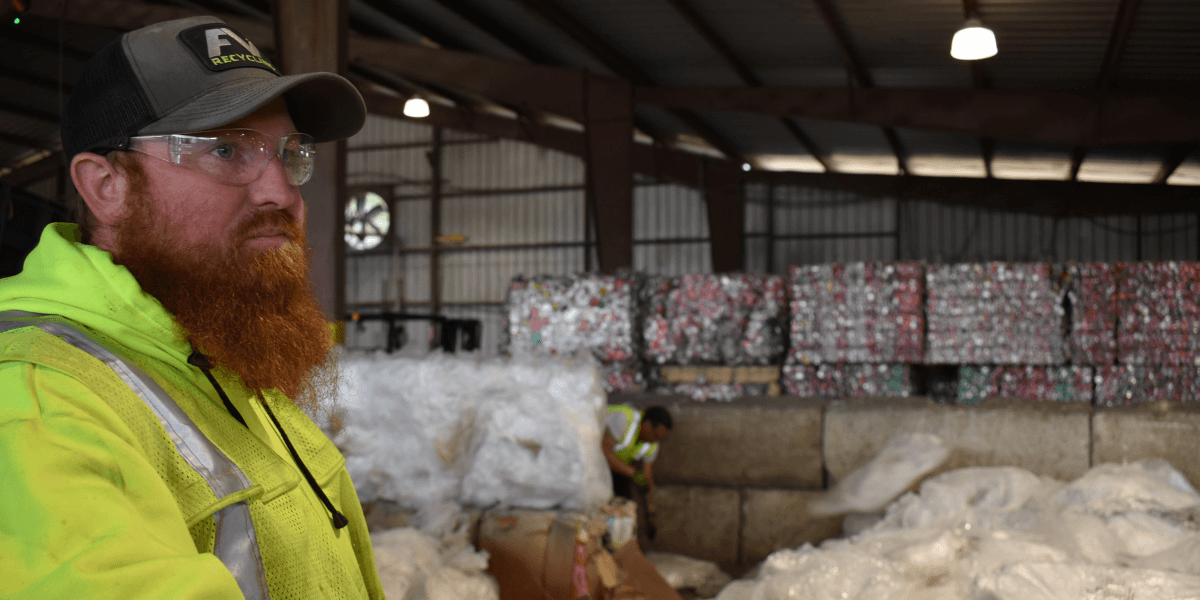
Request a Quote CTA with image of FV worker looking over recycling equipment.

Frequently Asked Questions

Our Recycler Won’t Accept a Material — What Are the Realistic Options?

Our Recycler Won’t Accept a Material — What Are the Realistic Options?

When your recycler won't accept a material, you typically have six realistic options: find a specialized processor, improve source separation,...
Read More
What Is Commercial Waste Management & Why It Matters for Your Business

What Is Commercial Waste Management & Why It Matters for Your Business

If you’re not treating commercial waste management as a strategic channel, you’re leaving money on the table. What used to be a back-of-house task is...

Read More
Our Baler Keeps Jamming — The 5 Most Common Causes and Fixes

Our Baler Keeps Jamming — The 5 Most Common Causes and Fixes

A jammed cardboard baler doesn't just slow down your operation; it costs you time, money, and efficiency across your entire commercial waste...

Read More