

Our Baler Keeps Jamming — The 5 Most Common Causes and Fixes
A jammed cardboard baler doesn't just slow down your operation; it costs you time, money, and efficiency across your entire commercial waste...
![]()
Sign up for monthly notifications from FV Recycling to stay up-to-date on news, events, education and more.
![]()
6 min read
FV Recycling
:
Mar 31, 2026 10:43:25 AM
|
When your recycler won't accept a material, you typically have six realistic options: find a specialized processor, improve source separation, use a material exchange, switch or supplement your commercial recycling services provider, invest in on-site equipment like a cardboard baler, or pursue landfill diversion alternatives like composting or energy recovery. |
The right path depends on the material type, your volume, and your current waste management setup but defaulting to the landfill is rarely your only choice. This guide walks through each option clearly so you can act fast and keep your recycling program on track.
Recyclers reject certain materials because contamination, market demand, and program limitations make some items economically or logistically impossible to process through standard channels. If you've recently been told your commercial waste management provider can't take a specific material, you're not alone and it doesn't automatically mean the material has to go to a landfill.
Understanding why rejection happens puts you in a much stronger position to find a real solution:
Understanding the root cause helps you pick the right path forward but the real advantage comes from knowing how recyclers classify and value materials in the first place.
Do you know how your materials are graded and what they’re actually worth?
When a recycler refuses a material, your realistic options include finding a specialized processor, exploring material exchange programs, adjusting your source separation practices, or partnering with a full-service commercial recycling provider. Not every solution fits every situation, but you almost certainly have more choices than "landfill or nothing."
Here's a breakdown of the most practical paths:
Some materials that standard programs reject — certain film plastics, polystyrene, or composite packaging — have dedicated processors who accept them. A waste recycling services provider with a broader network can often connect you directly.
Rejection is frequently a contamination problem, not a material problem. Tightening your sorting process — cleaner cardboard box recycling, properly separated bales — can make previously rejected loads acceptable. Investing in the right recycling bins (whether for schools, warehouses, or commercial facilities) is a low-cost first step.
Some businesses pay for materials that others throw away. Industrial cardboard recycling and pallet management, for example, have active secondary markets. A recycling management partner can help you identify buyers.
If your current waste collection provider simply doesn't have the capability, the most direct fix is switching to or supplementing with a commercial recycling services provider that does. Look for partners who offer flexible recycling pickup services and handle a broader range of materials.
Baling or compacting material on-site changes the conversation entirely — more on this in the next section.
If none of the above work for a particular material, responsible landfill diversion options like composting, energy recovery, or certified destruction may still keep it out of the waste stream.
On-site recycling equipment expands what you're able to recycle by improving the quality, density, and marketability of your materials — transforming rejected loads into commodities that processors will accept. This is one of the most underutilized solutions for businesses dealing with material refusals.
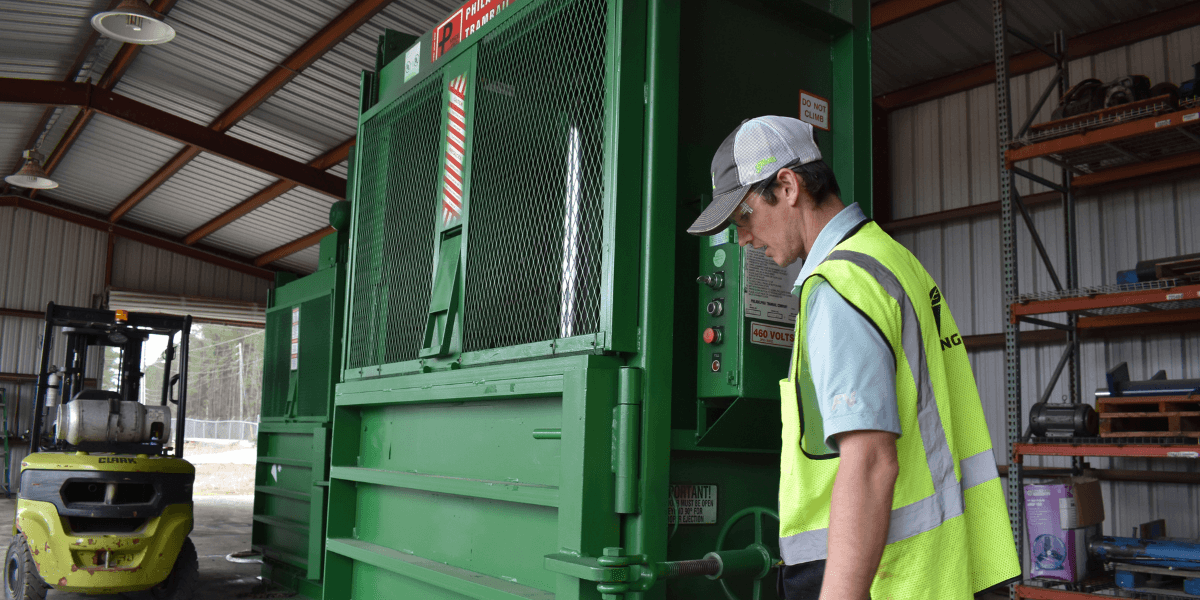
A cardboard baler compresses loose cardboard and paper into dense, uniform bales that are far easier and cheaper to transport and process. Many processors who reject loose, bulky cardboard will readily accept clean, baled material. Options include:
When evaluating a cardboard baler or broader recycling equipment, consider throughput volume, available floor space, and whether the bale wire and consumables are readily available through your provider.
Even the best equipment needs upkeep. Baler repair services are a critical and often overlooked part of any on-site recycling program. A broken baler means materials pile up, contamination risk rises, and your waste management services costs can spike. Make sure any equipment partner offers reliable service support.
Landfill diversion is the broader strategy of redirecting waste away from disposal sites through recycling, composting, reuse, and energy recovery; and it becomes your most important framework when standard commercial recycling services can't handle a specific material. Not being able to recycle something through your current provider doesn't mean landfill is the only answer.
Why Landfill Diversion Matters Beyond Compliance
When a material gets rejected, run through this before defaulting to disposal:
✅ Can source separation or cleaning make it acceptable to a current processor?
✅ Is there a specialized recycling collection or waste collection service for this material?
✅ Does on-site processing (baling, shredding, compacting) improve marketability?
✅ Is there a material exchange, reuse, or donation pathway?
✅ Are there green waste recycling, composting, or energy recovery options?
✅ Is a full-service commercial recycling services partner the most efficient long-term answer?
The goal of a strong landfill diversion strategy isn't perfection. It's systematically closing the gaps where material falls through.
You should partner with FV Recycling because they offer end-to-end commercial recycling services, from recycling pickup services and waste collection to equipment sales, baler rental, and pallet management, giving your business a single, accountable partner for even the most complex recycling challenges. When your current recycler says no, FV Recycling finds a way forward.
What Sets FV Recycling Apart
When your current provider hits a wall, FV Recycling is built to handle what others can't. Contact FV Recycling today to discuss your current material challenges and build a recycling program that actually works for your operation.
Whether a baler for sale or a baler for rent is right for your business depends on your volume, budget, and operational commitment. A baler rental makes sense for businesses with seasonal recycling peaks, those testing new recycling management workflows, or companies that want to avoid capital expenditure on recycling equipment. Purchasing is typically more cost-effective long-term for facilities with consistent, high-volume commercial cardboard recycling or industrial cardboard recycling needs. FV Recycling can help you evaluate both options based on your specific waste collection volumes.
A cardboard baler is designed specifically for cardboard and cardboard box recycling — not for mixed waste. Materials that should never be loaded include plastic stretch wrap or bags, metal banding or strapping, foam packing materials, wet or heavily soiled cardboard, and general commercial waste. These contaminants cause jams, damage internal components, and can create safety hazards. For industrial plastic recycling or green waste recycling, separate dedicated equipment and recycling collection streams should be used.
Using a cardboard baler is one of the most direct ways to improve landfill diversion for commercial and industrial operations. By compressing cardboard and box recycling into dense, uniform bales, businesses make it easier and more cost-effective for recycling pickup services to collect and process materials that would otherwise end up in a landfill. Paired with a broader commercial waste management strategy — including industrial plastic recycling, pallet management services, and green waste recycling — a baler can significantly reduce a facility's overall waste footprint and lower commercial waste removal costs.
FV Recycling offers a comprehensive range of waste recycling services well beyond cardboard balers. These include commercial waste management and commercial waste removal, industrial plastic recycling, green waste recycling, pallet management and pallet management services, waste collection and recycling pickup services, and recycling collection programs for schools and businesses. We also supply recycling bins for schools, support curbside recycling programs, and offer recycling equipment for sale or baler rental to meet businesses at every stage of their recycling management journey.
A jammed cardboard baler doesn't just slow down your operation; it costs you time, money, and efficiency across your entire commercial waste...
For industrial businesses, efficient cardboard recycling is not just an environmental initiative, it’s an operational necessity. Managing bulk...
Stretch wrap vs. shrink wrap does matter operationally because each material impacts speed, labor, safety, equipment, and recyclability...