

Skip to the main content.

Green Leaf FV Recycling Favicon-1

FV Recycling is your all-in-one
industrial & commercial recycling solution.

Sign Up

Sign up for monthly notifications from FV Recycling to stay up-to-date on news, events, education and more.

Green Leaf FV Recycling Favicon-1

Cost Efficient. Green Effective.

3 min read

Do We Need a Baler or Compactor & How Do We Decide?

Do We Need a Baler or Compactor & How Do We Decide?
5:17

Facilities eventually reach a point where waste stops being a background expense and starts becoming an operational issue. When dumpsters fill faster, dock space tightens, and hauling invoices increase, the question becomes clear: Do we need a baler or a compactor?


The answer depends on material composition, monthly volume, contamination levels, labor structure, and whether your goal is landfill reduction or volume compression. The wrong decision increases the cost per ton. The right decision reduces hauling frequency, improves dock flow, and creates measurable financial return.

New call-to-action

What Is the Difference Between a Baler and a Compactor?

A baler creates sellable recyclable bales, while a compactor compresses waste to reduce landfill volume.

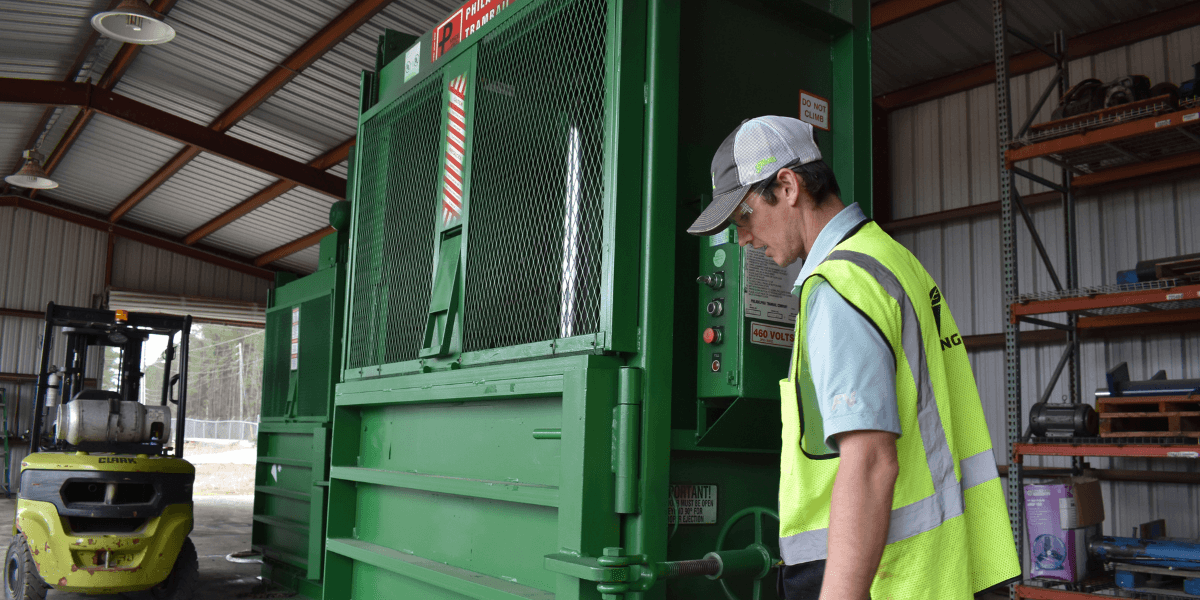
Although both machines compress material, they serve different financial purposes. A cardboard baler is designed for material recovery, landfill diversion, and revenue generation through commercial cardboard recycling. It produces dense, mill-ready bales of OCC, paper, or plastic that can be transported efficiently and sold based on grade.

A compactor, by contrast, is designed strictly to reduce the physical size of waste before disposal. It does not generate revenue. Instead, it lowers hauling frequency and stabilizes trash management costs.

The decision begins with one question:  Are you trying to monetize recyclable material, or simply reduce trash volume?

When Does Cardboard Volume Justify Installing a Baler?

Cardboard volume justifies a baler when loose material begins increasing hauling frequency, labor strain, or dock congestion.

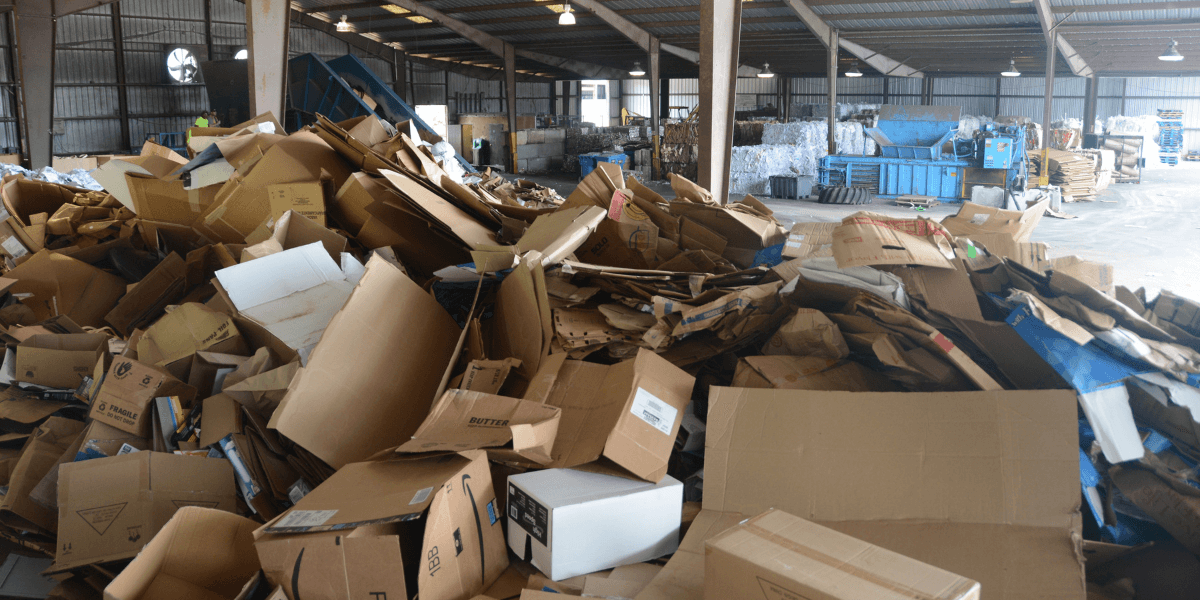
Most facilities reach a tipping point between 5–10 tons of cardboard per month. At that level, open-top containers overflow, teams spend excessive time breaking down boxes, and hauling invoices climb. Paying landfill rates for recyclable cardboard becomes operationally inefficient.

Installing a cardboard baler allows facilities to:

In high-volume distribution centers, manufacturing facilities, and industrial fabrication and construction sites, cardboard is often the dominant waste stream.

When Is a Compactor the Smarter Investment?

A compactor is the smarter investment when the majority of waste is mixed, contaminated, or non-recyclable.

If material and grade audits show that most of the waste stream cannot be monetized, investing in a baler may result in underutilized recycling equipment. In these cases, cost reduction—not revenue generation—is the priority.

Compactors:

  • Reduce dumpster pulls
  • Lower hauling costs
  • Control overflow and odor
  • Improve dock cleanliness
  • Support food-grade or sanitary operations

For retail, food distribution, hospitality, or facilities with high contamination rates, a compactor often delivers stronger financial efficiency than a baler.

Can a Facility Benefit From Having Both a Baler and a Compactor?

Many high-volume facilities benefit from operating both systems to separate recyclable and residual waste streams.

Distribution centers frequently generate large amounts of clean OCC alongside mixed trash. In these cases, separating the streams provides the strongest ROI.

A typical setup includes:

  • A cardboard baler for recyclable corrugate
  • A compactor for residual landfill waste

This structure maximizes recycling revenue while minimizing landfill cost. It also improves reporting accuracy for sustainability metrics and commercial waste management oversight.

When volume increases, a blended equipment strategy often becomes the most operationally stable solution.

What Should Be Audited Before Deciding Between a Baler or Compactor?

Facilities should audit material composition, monthly tonnage, contamination levels, hauling frequency, labor time, and cost per ton before selecting equipment.

Recycling equipment decisions made without a structured audit often lead to overspending or operational friction.

Key evaluation points include:

  • Average monthly cardboard tonnage
  • Mixed waste tonnage
  • Current hauling schedule
  • Landfill versus recycling cost comparison
  • Available dock space
  • Labor handling time
  • Maintenance needs such as baler repair and preventative service

Tonnage guidelines provide direction:

  • Under 3 tons/month → Managed service or small baler
  • 3–10 tons/month → Vertical baler or baler rental
  • 10+ tons/month → Horizontal baler system
  • Primarily mixed waste → Stationary or self-contained compactor

The correct decision aligns equipment with workflow, not just volume.

Why Choose FV Recycling for Your Equipment?

FV Recycling helps facilities choose the right equipment based on real operational data, not sales pressure.

From cardboard balers and compactors to baler repair and full recycling system design, FV Recycling builds scalable solutions that reduce cost per ton, improve dock flow, and support long-term landfill diversion.

If you're asking whether you need a baler or a compactor, the next step isn’t buying equipment — it’s getting the right strategy.

New call-to-action

FAQ's

FV Recycling: Your Go-To for Industrial Cardboard Recycling

FV Recycling: Your Go-To for Industrial Cardboard Recycling

For industrial businesses, efficient cardboard recycling is not just an environmental initiative, it’s an operational necessity. Managing bulk...

Read More
We Have Multiple Sites, How Do We Standardize Recycling Without Chaos?

We Have Multiple Sites, How Do We Standardize Recycling Without Chaos?

Standardizing recycling across multiple facilities requires a structured operational framework that aligns material rules, equipment standards,...

Read More
What Is Commercial Waste Management & Why It Matters for Your Business

What Is Commercial Waste Management & Why It Matters for Your Business

If you’re not treating commercial waste management as a strategic channel, you’re leaving money on the table. What used to be a back-of-house task is...

Read More