

Skip to the main content.

Green Leaf FV Recycling Favicon-1

FV Recycling is your all-in-one
industrial & commercial recycling solution.

Sign Up

Sign up for monthly notifications from FV Recycling to stay up-to-date on news, events, education and more.

Green Leaf FV Recycling Favicon-1

Cost Efficient. Green Effective.

5 min read

How Often Should a Business Schedule Waste Pickup?

Commercial Waste Pickup Frequency: How Often Is Right?
10:31

Most commercial sites land on one of four schedules: weekly, twice weekly, every other week, or on-call. Most land on one of four container setups too: a front-load container, a roll-off, a compactor, or a baler. The right combination isn't a matter of preference or habit; it comes down to how much material you generate in a week and how much usable capacity you have to hold it. Get that math wrong in either direction and you pay for it, either in hauls you didn't need, or in overflow you couldn't avoid.


Here's how to work out what your business actually needs.

Bale Route Hauling - get started CTA.

How often should a business schedule waste and recycling pickup?

Most commercial operations need weekly trash service and every-other-week to weekly recycling service, but the honest answer is that your frequency should be set by your weekly volume divided by your usable container capacity, not by whatever schedule you inherited.

A few patterns we see consistently:

  • Offices and professional services generate steady, low-volume waste with a high paper and cardboard share. Weekly trash and every-other-week recycling is usually plenty.
  • Retail runs on delivery cycles. Cardboard spikes hard on truck days, which often means the recycling container needs more frequent service than the trash container — the opposite of what most retail sites are set up for.
  • Restaurants and food service are weight-heavy and odor-sensitive. Trash frequency is driven by holding time, not capacity, so twice weekly is common even when the container isn't full.
  • Light manufacturing and distribution generate high, predictable volumes of clean cardboard and film. This is where scheduled pickups often stop making sense and equipment starts to.
  • Multi-site operations rarely have one right answer. Standardizing the schedule across every location is the most common source of overservicing in the portfolio.

How do you know your current pickup schedule is wrong?

You can usually tell within two weeks of paying attention, because a mis-set schedule fails in one of two visible directions.

You're over-serviced if:

  • Containers are consistently less than about 60% full when the truck arrives
  • You've never had an overflow you can remember
  • Your service level hasn't changed since the account was opened, but your operation has
  • You're on the same frequency at every location despite different volumes

You're under-serviced if:

  • Material is stacked beside the container waiting for the next pickup
  • You're getting extra pull charges or overflow fees
  • Cardboard is ending up in the trash container because the recycling container is full
  • Lids won't close, which usually means wet material and a lower grade on what should have been clean

That third under-service symptom is the expensive one. When the right container is full, material goes in the wrong container, and you lose the rebate on material you already paid to generate. Contamination is rarely a training problem first — it's usually a capacity problem that looks like a training problem.

What size container does your business need?

Container sizing comes down to one calculation: your weekly volume in cubic yards, divided by the fullness you want to hit at pickup, which gives you the capacity you need between services.

The practical ladder looks like this:

  • 2–8 yard front-load containers — the default for offices, retail, and most small-to-mid sites. Serviced on a fixed schedule.
  • 20–40 yard roll-offs (open top) — for bulky, high-volume, or project-based material. Serviced on call or on a loose cadence.
  • Compactors — when your volume is real but your material is low-density. You're buying density, which buys you fewer hauls.
  • Balers — when the material is clean, consistent, and worth something. You're not just reducing hauls; you're converting a cost line into a rebate line.

The thing that trips up most sizing decisions is that waste is a volume problem, not a weight problem. Loose cardboard takes up enormous space relative to what it weighs, which means you can be paying for frequent hauls on containers that are mostly air. That's the single most common inefficiency we find when we walk a site.

When does volume justify a baler instead of more pickups?

Once a site is generating enough clean, consistent material to bale regularly, adding equipment almost always beats adding hauls. The threshold isn't a universal number, but it's a real one, and it's worth checking rather than assuming.

 Monthly volume   (clean cardboard)

 Typical setup

 What's driving the decision

Under 5 tons

Scheduled pickup, or compaction if space is tight

Haul frequency and fill discipline. Equipment rarely pays back at this volume.

5–10 tons

Evaluation range

Site-specific. Space, labor, and material consistency decide it — not volume alone.

10+ tons

Vertical baler

Hauls drop sharply and clean material converts from a cost line to a rebate line.

Baling changes the economics in three ways at once:

  • Fewer hauls. Baled material moves as weight, not volume, so a trailer carries far more of it.
  • Better grade. Baled material is dry, separated, and consistent — which is what mills pay for.
  • Reclaimed floor space. Containers and staging areas give space back to the operation.

If your volume is close to the line, the answer usually isn't "buy a baler" — it's "find out where you actually sit." We cover the equipment decision in more depth in our guide on Balers vs. Compactors vs. Open Bins. 

How should aluminum cans fit into your bin plan?

For larger operations, cans need their own dedicated stream, because baled aluminum is where nearly all of the value is.

Most commercial can volume comes from a few sources:

  • Beverage production and distribution
  • Stadiums, arenas, and event venues
  • Hotels, resorts, and high-volume food service
  • Large campuses and plants with on-site cafeterias

Keep cans separate, always. Mixed with paper, plastics, or food residue, they get downgraded or rejected. Kept clean, they can be baled into dense bales that ship efficiently and bring the best price. That makes cans the one stream to accumulate rather than schedule: let them build up to a full load, then move them.

How many companies specialize in can recycling services?

Most waste and recycling companies accept aluminum cans, but only a small share will take baled or bulk aluminum and pay you for it as its own stream — and that distinction matters more than the number.

There are effectively three tiers:

  • General haulers who take cans inside a commingled recycling container. Cans are accepted, but not valued separately.
  • Full-service recyclers who will separate and market individual streams, including aluminum, when the volume supports it.
  • Brokers and processors who buy specific grades in bulk and pay against market pricing.

When you're evaluating providers, the question to ask isn't "do you take cans?" — nearly everyone says yes. It's "will you take them as a separate stream, and how do you pay on them?" The answers separate the field quickly.

What's the fastest way to right-size your service?

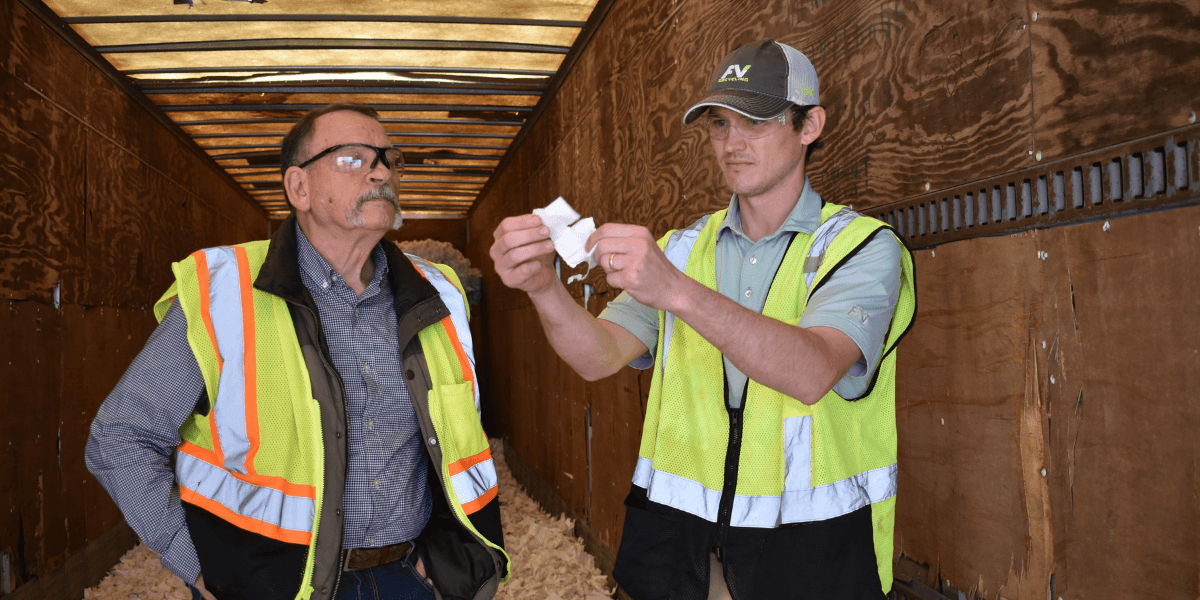
A waste audit is the fastest path, because it replaces estimates with your actual volumes, container fullness, and service history in one pass.

Most sites come out of an audit with the same three findings: one container that's too big, one that's serviced too often, and one stream that's worth separating and currently isn't. None of those are visible from an invoice. All of them are visible from a walk-through and 30 days of data.

If you're not sure whether your schedule fits your operation anymore, the waste audit page is where to start.

New call-to-action

Frequently asked questions

What is a pull charge?

A pull charge is the fee for hauling a container, billed per trip rather than per ton. It's why an under-filled container on a frequent schedule gets expensive quietly; you're paying full price for a partial load every time.

Can I change my pickup schedule mid-contract?

Usually yes. Most commercial service agreements set a term and a rate, not a fixed frequency, so service level changes are typically a phone call rather than a renegotiation. Check your agreement for a minimum service level clause.

Is on-call pickup cheaper than scheduled service?

It can be, for genuinely irregular volume. For steady volume, it's usually more expensive per haul and harder to plan around, and you take on the job of monitoring fullness yourself.

Do you need a separate bin for aluminum cans?

Yes, if you want to be paid for them. Cans mixed into a commingled container get absorbed into a lower-value stream. Kept separate, they hold their own value.

How many cubic yards is a 4-yard dumpster per week?

Four cubic yards per pickup, so a 4-yard container on weekly service gives you four cubic yards of weekly capacity - before compaction and before the roughly 20–40% of capacity most sites lose to poor fill.

Commercial Waste Management: How Do You Audit Without Disruption?

Commercial Waste Management: How Do You Audit Without Disruption?

A commercial waste audit doesn't require shutting down your facility or pulling supervisors off the floor. Pick one week, two waste streams, and...

Read More
Recycling Vendor Scorecard: How to Compare Recyclers Beyond Price

Recycling Vendor Scorecard: How to Compare Recyclers Beyond Price

Price is the easiest thing to compare and the least predictive of what you'll actually spend. Across a year, missed pickups, cardboard baler...

Read More
We Have Multiple Sites, How Do We Standardize Recycling Without Chaos?

We Have Multiple Sites, How Do We Standardize Recycling Without Chaos?

Standardizing recycling across multiple facilities requires a structured operational framework that aligns material rules, equipment standards,...

Read More