Table of Contents
Recycling Equipment for Sale
Why Invest in Recycling Equipment?
Whether you run a retail distribution center, a manufacturing plant, or a logistics operation, managing recyclable materials efficiently can unlock tremendous operational and financial benefits. Investing in commercial recycling equipment helps businesses take control of their waste stream, reduce hauling costs, and meet increasingly stringent sustainability standards.
As landfill fees rise and recycling rebates fluctuate, businesses across industries are recognizing the need for efficient, scalable solutions. Recycling equipment like cardboard balers, compactors, shredders, and conveyor systems are now essential for any facility aiming to reduce landfill waste and capture revenue from recyclables. When paired with the right accessories—like bale wire and bins—these tools form the backbone of a smart, scalable waste management strategy.
How Do Balers and Compactors Actually Work in Daily Operations?
Recycling equipment is most effective when it aligns with how material moves through your facility — not just how much material exists.
Cardboard balers compress OCC into dense bales that reduce hauling frequency and increase resale value. Compactors reduce landfill-bound waste volume to minimize pickups and container usage.
Operationally, the difference matters:
- Balers impact rebate value and bale quality
- Compactors impact hauling cost and container frequency
- Both affect dock flow, labor efficiency, and safety
When equipment is undersized or poorly placed, recycling becomes reactive — resulting in overflow, emergency hauls, and inconsistent diversion performance.
What Types of Recycling Equipment Are Available?
The type of recycling equipment required depends on the volume and material types generated within a facility. Most commercial operations benefit from a combination of balers, compactors, conveyors, and support accessories aligned with their specific material stream.
Cardboard Balers
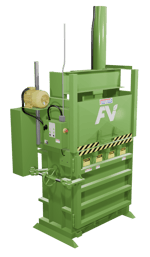
Cardboard balers compress corrugated cardboard (OCC) into compact, stackable bales. This reduces storage needs and makes transportation and resale more efficient. They're ideal for warehouses, distribution centers, grocery stores, and retail chains generating high volumes of cardboard.
Headline
Add your content here.
Compactors
Compactors minimize the volume of mixed recyclables or landfill-bound waste. They’re especially useful for facilities with limited space and help reduce hauling costs by fitting more material into fewer loads.
Headline
Add your content here.
Shredders
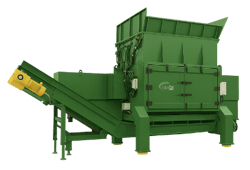
Shredders break down bulky materials and destroy sensitive documents, often preparing waste for baling or further processing. They're essential for businesses that deal with high volumes of scrap or need data-secure disposal.
Headline
Add your content here.
Conveyors
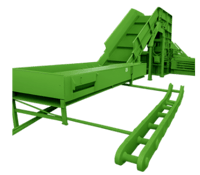
Conveyor systems move materials seamlessly between recycling machines, such as from a shredder to a baler. This automation reduces manual labor, speeds up processing, and increases overall operational efficiency.
Headline
Add your content here.
Bale Wire & Recycling Accessories
Bale wire is used to secure compressed materials into bales, ensuring they stay intact during storage and transport. Other accessories, like safety guards and machine upgrades, help maintain equipment performance and workplace safety.
The key is having a setup that minimizes manual handling while maximizing throughput. Your equipment lineup should evolve with your waste stream—and choosing scalable, reliable machines from the outset will save you time and money as your needs grow.
How Do You Size a Cardboard Baler or Compactor Correctly?
Equipment sizing should be based on real operating conditions rather than weekly averages.
Correct sizing considers:
- Daily material volume
- Peak production periods
- Number of shifts
- Dock space and layout
- Pickup frequency
- Labor availability
If a baler operates continuously, overflows between pickups, or produces inconsistent bale weights, it is likely undersized. Properly sized equipment stabilizes hauling schedules, increases bale density, and reduces unnecessary labor.
New vs. Used Recycling Equipment: What’s Best for Your Business?
The decision between new and used equipment depends on volume, risk tolerance, and long-term operational goals.
New equipment offers warranties, updated safety features, modern automation, and longer expected lifespans, making it ideal for high-volume or multi-site operations where uptime is critical.
Used equipment may reduce upfront cost but can require more maintenance, offer limited customization, and increase downtime risk. It is typically best suited for lower-volume sites, secondary facilities, or short-term needs.
New Recycling Equipment
-
Comes with manufacturer warranties and tech support
-
Features the latest safety technology and energy-efficient systems
-
Longer expected lifespan and reduced risk of downtime
-
Access to the latest models and custom configurations
-
Higher initial investment, but better long-term ROI
-
Ideal for high-output facilities that prioritize reliability
Used Recycling Equipment
-
Lower upfront cost, ideal for tight budgets
-
May lack modern safety features or automation
-
May require more frequent repairs and part replacements
-
Limited availability and fewer customization options
-
Cost-effective for low-volume or short-term needs
-
Best suited for secondary locations or backup equipment
How Does Equipment Impact Hauling Costs and Rebates?
Recycling equipment directly affects transportation efficiency and resale value.
Heavier, consistent bales:
- Reduce hauling frequency
- Maximize trailer weight
- Lower cost per ton
- Protect the rebate value
Undersized equipment often leads to light loads, excess pickups, and higher cost per ton — even if the equipment itself was inexpensive.
ROI is driven by operational efficiency, not just upfront price.
What Causes Recycling Equipment Downtime and How Often Should Balers and Compactors Be Serviced?
Recycling equipment downtime is most often caused by improper loading, mixed or contaminated material streams, hydraulic wear, worn tie systems, or a lack of structured preventative maintenance.
When balers or compactors fail, recyclable material is frequently diverted to landfill, increasing hauling costs and disrupting diversion performance. In high-volume facilities, even short periods of downtime can create dock congestion and operational instability.
Service frequency should be based on usage volume, shift structure, and operating environment. Facilities running multi-shift operations or producing dense bales require more frequent inspections than low-volume sites. A structured preventative maintenance program should include hydraulic inspections, ram alignment checks, safety system testing, debris removal, and scheduled wear-part replacement.
Consistent servicing reduces emergency repairs, stabilizes bale quality, protects rebate value, and extends equipment lifespan.
How Does FV Recycling Support Equipment from Installation Through Ongoing Operations?
Recycling equipment performs best when installation, training, maintenance, and hauling are aligned from the start, especially when the goal is managing waste efficiently at scale.
FV Recycling begins with a detailed site assessment to evaluate layout, clearance, electrical access, and dock flow, ensuring equipment integrates seamlessly into daily operations without creating congestion or safety risks. Installation includes proper anchoring, calibration, and operational testing so systems are ready to perform immediately.
Hands-on operator training reduces misuse, contamination, and downtime while improving long-term equipment reliability.
Ongoing support ensures systems continue functioning under real operating conditions and includes:
- Preventative maintenance and baler repair
- Bale pickup and hauling coordination
- Brokerage and market access support
- Equipment sizing reviews and operational optimization
Rather than simply selling equipment, FV Recycling supports performance from initial setup through sustained operation.