


Table of Contents
Materials & Grades of Recyclable Materials
Commercial waste management programs are not defined by how many materials a facility recycles — they’re defined by how those materials are graded, handled, and managed at scale.
Material grade impacts everything from recycling equipment selection and pickup frequency to rebate value and landfill diversion rates. Understanding these differences allows facilities to build recycling programs that are operationally efficient, cost-effective, and scalable as volume grows.
This guide explains the most common recyclable materials in commercial environments, how they are graded, and why those grades matter in real-world operations.
What materials are commonly recycled in commercial facilities?
Most commercial and industrial recycling programs focus on materials that can be consistently generated, efficiently handled, and reliably marketed.
While many materials are technically recyclable, only a subset make sense operationally at scale—especially when factoring in contamination, handling costs, and the risk of recycling rejected materials.
The most common recyclable materials in commercial facilities include:
Each material behaves differently in terms of volume, contamination risk, labor requirements, and downstream value. Successful programs account for these differences instead of treating all recyclables the same.
.png?width=1200&height=600&name=Baler%20Repair%20%26%20Recycling%20Equipment%20What%20Businesses%20Need%20to%20Know%20(1).png)
Cardboard (OCC): The foundation of most recycling programs
Cardboard, specifically OCC (Old Corrugated Containers), is the highest-volume recyclable material for most distribution centers, manufacturers, packaging automation systems, and retail operations.
Because of its consistency and market demand, OCC often becomes the starting point for structured recycling programs.
What qualifies as recyclable cardboard?
From an operational standpoint, recyclable cardboard is cardboard that can move through a cardboard baler and downstream processing without additional sorting, cleaning, or rework. That usually means cardboard that has been handled correctly from the moment it’s emptied.
Facilities that succeed with OCC recycling typically break down boxes at the source, keep cardboard dry, and prevent non-fiber materials from entering the stream. When cardboard is treated as “just another waste container,” contamination tends to creep in quickly.
Recyclable cardboard generally includes:
-
Clean, dry corrugated boxes
-
Shipping cartons with no liners or coatings
-
Double-wall and triple-wall corrugated used for heavy products
What affects cardboard grade?
Cardboard grade isn’t determined at the dock — it’s determined by everything that happens before the cardboard reaches the baler. Small decisions made on the floor, often by multiple shifts, directly affect whether OCC holds its value or gets downgraded.
Moisture from dock exposure, plastic stretch wrap left on boxes, food residue from break areas, or mixing paperboard into corrugated all reduce consistency. Over time, these issues don’t just impact rebate value — they change how often loads are rejected or require rework.
Cardboard grade is determined by:
-
Cleanliness (no trash, plastic, or food residue)
-
Moisture (wet cardboard quickly loses value)
-
Coatings or liners (wax, plastic, or insulation)
-
Consistency (corrugated-only vs mixed fiber)
Wax-coated or treated cardboard is often restricted or rejected entirely, depending on processing capabilities.
Why does OCC quality matter operationally?
OCC quality shows up in day-to-day operations long before it shows up on a rebate sheet. Clean cardboard moves through cardboard balers more predictably, produces consistent bale weights, and aligns better with scheduled pickups.
When quality slips, the impact is immediate: balers jam more often, bales fall apart, pickup schedules become inconsistent, and rejected loads create unexpected costs and delays. What feels like a “small contamination issue” on the floor often turns into a recurring operational problem.
How are paper materials graded for recycling?
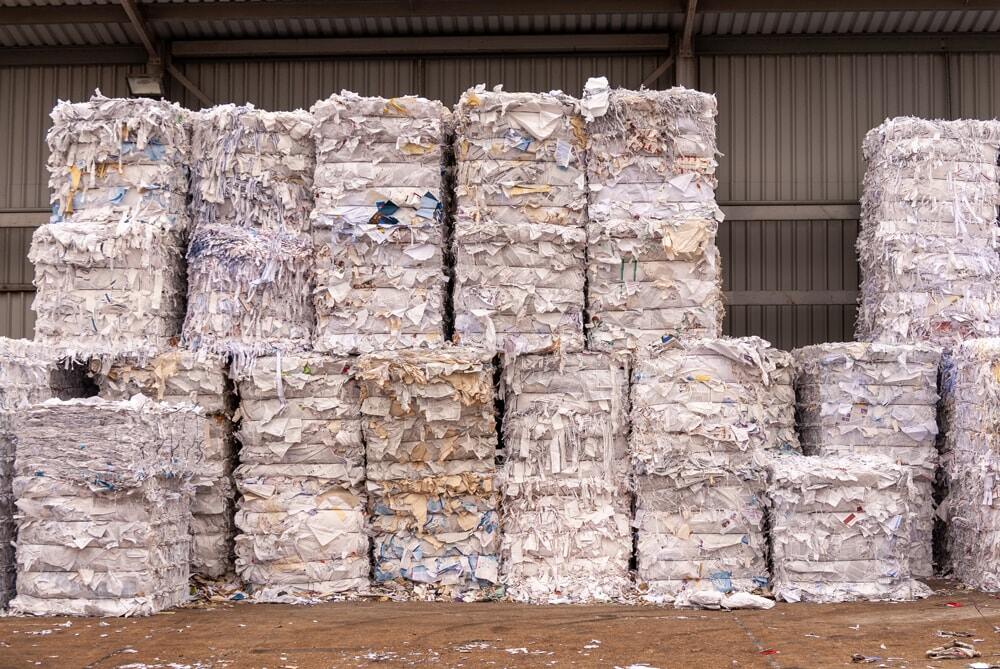
Paper recycling is driven by fiber quality, end use, and contamination tolerance, not just volume. While many facilities generate paper waste, separating paper only makes sense when grades can remain clean and consistent without adding operational friction.
Industry-recognized paper grades define what can be processed efficiently and marketed reliably. These grades help recyclers manage fiber length, de-inking requirements, and allowable contaminants, which directly affects handling requirements and value.
Common paper grades used in recycling programs
In commercial facilities, official paper grades typically appear as:
- OCC (Old Corrugated Containers) – shipping boxes, corrugated cardboard, and kraft paper
- ONP (Old Newspapers) – newsprint and printed inserts
- Mixed Paper – junk mail, magazines, catalogs, and similar paper products
- Sorted Office Waste / White Ledger – high-quality office paper, computer printout, and letterhead
- Boxboard Cuttings – clean paperboard from packaging and consumer products
- Cartons – food and beverage cartons, managed separately or within mixed paper streams
Each grade has different tolerance levels for contamination, moisture, and mixing. When incompatible paper grades are combined, material is typically downgraded—often removing the operational and financial benefit of separating paper in the first place.
When does paper separation add value?
Paper separation works best when it’s structurally supported by the operation, not just encouraged by signage. Facilities that succeed with paper recycling usually have clearly defined collection points, limited exposure to food or moisture, and teams that understand what belongs in each container.
Paper separation is often effective in:
-
Office-heavy environments
-
Low-contamination settings
-
Facilities with minimal food exposure
In these environments, paper can remain clean long enough to justify separate handling and pickup.
When does paper separation create friction instead of value?
In high-volume, fast-paced operations, paper is often generated alongside cardboard, plastic, and food waste. Without tight controls, paper containers become catch-alls — introducing contamination that reduces value and increases handling time.
Operationally, paper should be separated only when the system can support it. When it can’t, paper is often better managed as part of a broader fiber strategy instead of a standalone stream.
What types of plastics are recyclable by grade?
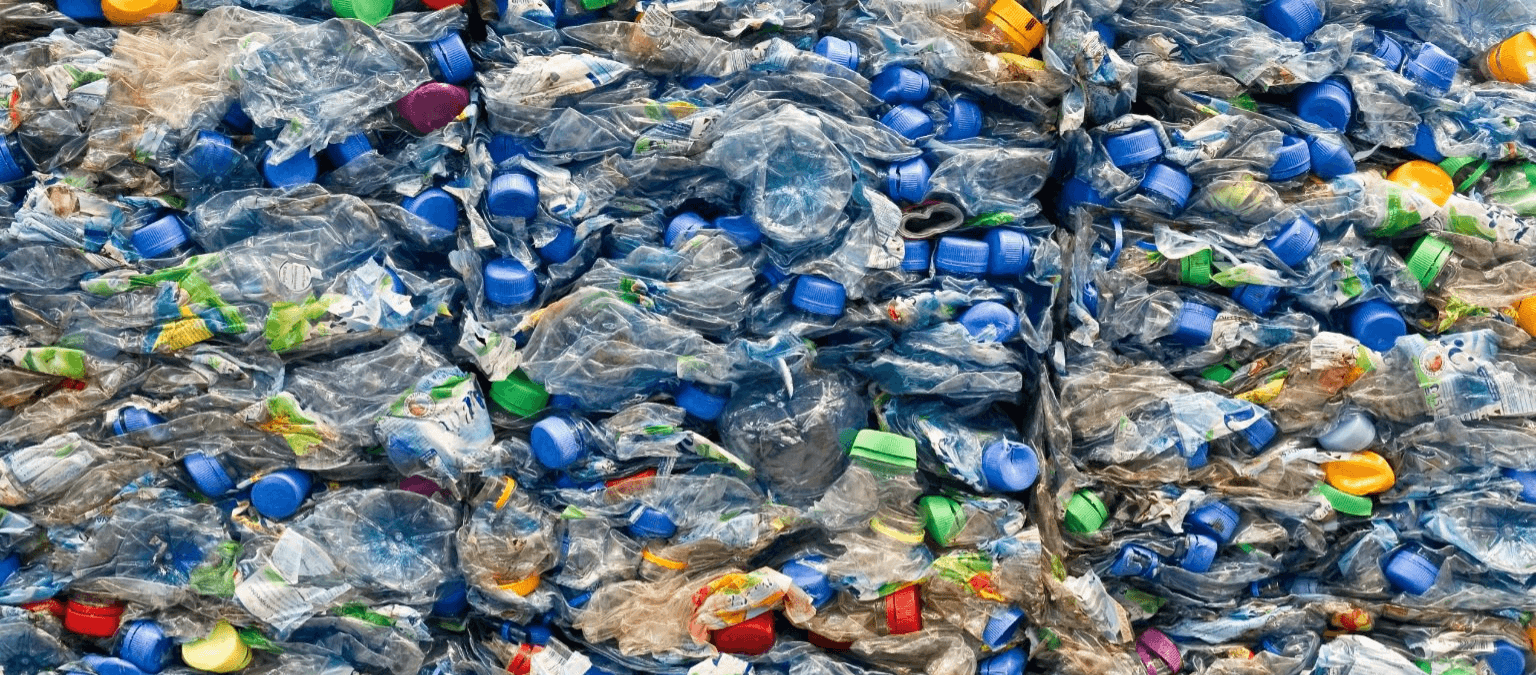
Plastics are one of the most operationally sensitive recycling streams in commercial facilities. Unlike cardboard or paper, plastics vary widely in composition, form, and tolerance for contamination — which means small handling mistakes upstream can eliminate recyclability downstream.
In most facilities, plastic is generated at multiple points: receiving, pallet breakdown, packing stations, maintenance areas, and break rooms. Without clear collection methods, plastics are often treated as a secondary material and end up mixed into other streams “temporarily,” where contamination becomes permanent.
Because of this, plastic recyclability is determined less by whether plastic exists on-site and more by how intentionally it’s collected and controlled.
What determines whether plastic is recyclable?
From an operational standpoint, plastic recyclability depends on whether the material stream remains consistent enough to be processed without additional sorting.
Plastic recyclability is determined by:
-
Resin type
-
Material form (rigid vs film)
-
Color and cleanliness
-
Consistency of the stream
When multiple plastic types are mixed together or contaminated with non-plastic materials, downstream processing becomes inefficient or impossible.
Common commercial plastic streams
Commercial recycling programs typically focus on plastic streams that can be generated consistently and kept clean with minimal intervention.
The most common commercial plastic streams include:
-
PET (#1) bottles
-
HDPE (#2) containers
-
Rigid plastics (totes, buckets, crates)
-
Film plastics (stretch wrap and shrink wrap)
Each of these streams behaves differently operationally and requires its own handling strategy.
How are metals sorted and graded in recycling programs?
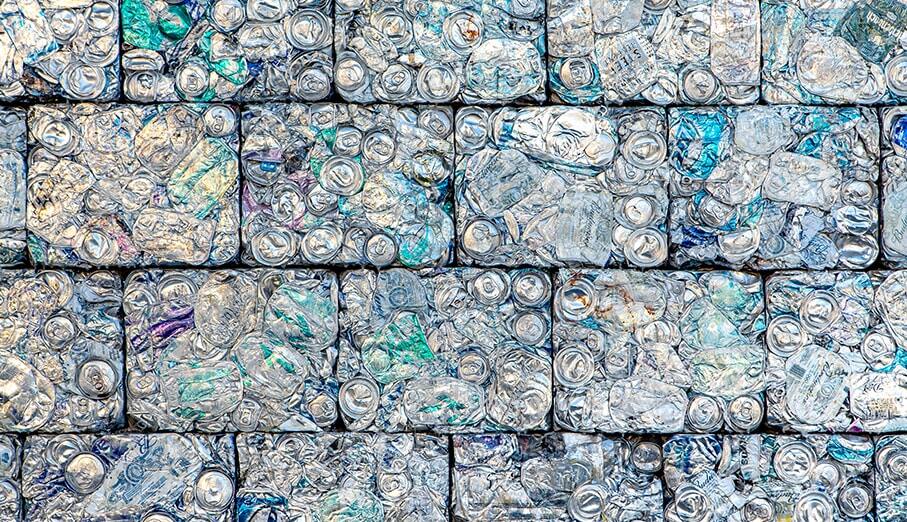
Metals rarely dominate floor space the way cardboard or plastics do, but operationally, they behave very differently. In most facilities, metal waste is generated intermittently — during maintenance work, equipment replacements, line changes, or routine repairs — rather than as a constant stream.
Because metal generation is sporadic, it’s often handled informally. Scrap bins appear near maintenance areas, old parts get staged near docks, and beverage cans are collected inconsistently. Without intentional separation, high-value metals are easily mixed into lower-value scrap or even disposed of entirely.
From a grading perspective, metals are sorted into two primary categories based on magnetic properties, but the real operational challenge is visibility and discipline, not classification.
How are metals are graded and categorized?
Metal grading starts with separating materials that respond to magnets from those that don’t. This separation determines processing requirements, downstream markets, and rebate potential.
Metals are typically sorted into:
-
Ferrous metals (magnetic)
-
Non-ferrous metals (non-magnetic)
Although metals usually represent lower volume than cardboard or plastic, they often carry higher per-ton value, making proper separation financially meaningful even at modest quantities.
Common recyclable metals in commercial programs
In commercial and industrial construction environments, metal recycling usually centers around materials generated through operations, maintenance, and consumption rather than packaging alone.
Common recyclable metals include:
-
Aluminum, including used beverage cans
-
Steel and tin
-
Copper and insulated wire
-
Mixed industrial scrap
Each of these materials has different value profiles and tolerance for mixing, which is why clear separation matters.
Why does metal separation matters operationally?
Metal separation affects more than just rebate checks — it determines whether metal recycling feels worthwhile or gets abandoned over time.
When metals are mixed together or combined with other material streams, non-ferrous value is diluted, processing costs increase, and contamination spreads into otherwise clean recycling streams. This often leads facilities to conclude that “metal recycling doesn’t move the needle,” when the issue is actually separation.
Proper separation can:
-
Increase rebate value
-
Reduce processing costs
-
Prevent contamination of other material streams
Even small volumes of non-ferrous metals can materially impact recycling economics when they’re kept visible, separated, and handled intentionally.
.png?width=1200&height=600&name=Pallet%20Management%20(2).png)
How are wood and pallets handled in recycling programs?
Wood materials — especially pallets — behave very differently from cardboard, paper, or plastics in commercial environments. Pallets are bulky, irregular, and slow to move, which means they tend to accumulate quickly and take up valuable dock and yard space.
In many facilities or multi-site operations, pallets start as a secondary concern. They’re stacked wherever space allows, moved occasionally, and often handled differently by each shift. Over time, that lack of structure turns pallets into a recurring operational issue: blocked dock doors, safety concerns, and inconsistent disposal costs.
Because of this, wood materials are rarely managed through traditional single-stream recycling. Instead, they require intentional recovery and handling strategies that reflect how they move — or don’t move — through the operation.
How are wood materials are typically handled?
Rather than being “recycled” in the traditional sense, wood materials are usually routed through recovery, reuse, or processing programs based on condition and volume. The goal is to preserve value where possible and reduce unnecessary disposal.
Wood is typically handled through:
-
Recovery and reuse
-
Repair and resale
-
Grinding or processing
-
Disposal when recovery is not viable
Treating all wood the same eliminates value and increases handling costs.
Common wood and pallet categories
Operationally, wood materials fall into a few clear categories based on condition and reusability. Identifying these categories early helps facilities avoid unnecessary disposal and keeps pallet areas manageable.
Common wood categories include:
-
Reusable pallets
-
Repairable pallets
-
Scrap pallets
-
Crates and dunnage
Mixing these categories together usually results in higher costs and missed recovery opportunities.
When does pallet management becomes its own operational stream?
As pallet volume increases, pallets stop behaving like incidental waste and start behaving like inventory. At that point, recovery and resale often outperform disposal or grinding — both financially and from a sustainability standpoint.
Many facilities eventually manage pallets as a dedicated operational stream, with defined staging areas, regular recovery schedules, and clear handling standards. When pallet management is structured, dock flow improves, safety risks decrease, and waste costs become more predictable.
.png?width=1200&height=600&name=Mixed%20Recycling%20(1).png)
What are mixed and specialty recyclable materials?
Mixed and specialty materials are where most recycling programs stop being straightforward.
These materials don’t move in predictable volumes, don’t fit neatly into standard containers, and often lack clear on-site ownership. They’re generated inconsistently, handled by different teams, and frequently staged “temporarily” until someone decides what to do with them. That’s why they tend to accumulate in corners, cages, or yards — and why they often become a source of confusion or frustration.
Unlike cardboard or pallets, mixed and specialty materials rarely work inside standard recycling streams. Instead, they require custom handling, clear standards, and often brokerage support to be managed effectively.
What makes a material “mixed” or “specialty”?
From an operational standpoint, these materials share a few traits:
-
They don’t generate enough volume for routine pickup
-
They’re easy to contaminate
-
They require specific downstream processing
-
They don’t tolerate casual mixing with other recyclables
Because of this, attempting to treat them like standard recyclables usually leads to rejected loads or increased disposal costs.
Common mixed and specialty materials found in commercial facilities
Most facilities encounter a similar set of specialty materials over time, often as operations evolve or product mix changes.
Examples include:
-
Electronics and e-waste (monitors, devices, components)
-
Foam packaging (EPS, protective inserts)
-
Textiles (rags, uniforms, protective materials)
-
Composite materials (multi-layer packaging, bonded materials)
-
Food-contaminated packaging
Each of these materials requires a different handling strategy, and mixing them together almost always eliminates recoverability.
Why do these materials often cause recycling programs to break down?
Mixed and specialty materials are rarely the largest waste stream but they’re often the most disruptive.
Inconsistent handling, unclear standards, and limited downstream markets make these materials difficult to manage without a plan. When facilities try to recycle them opportunistically, loads are frequently rejected, labor time increases, and confidence in the recycling program erodes.
Operationally, these materials need clear decision rules: whether to separate, broker, store temporarily, or dispose. When those rules aren’t defined, mixed materials become a catch-all that undermines otherwise successful recycling streams.
How do material grades impact recycling programs?
Material grade is not just a quality issue, it is an operational lever that influences how smoothly a facility runs day to day.
On the floor, grading decisions affect how materials move, where they accumulate, and how much labor is required to keep recycling from becoming a constant interruption. At scale, grading determines whether recycling feels predictable and controlled or reactive and frustrating.
Facilities that treat grading as an afterthought often experience the same issues: overflowing containers, emergency pickups, rejected loads, and unclear cost drivers. Facilities that design programs around grade see recycling function as a support system rather than a disruption
Material grades directly affect:
-
Rebate value
-
Equipment requirements (balers, compactors)
-
Pickup frequency
-
Bale route hauling costs
-
Landfill diversion rates
As volume increases, grading decisions determine whether recycling simplifies operations or creates friction. Cleaner, well-sorted materials move more efficiently and produce more predictable outcomes.
How does FV Recycling manage material grading at scale?
FV Recycling approaches material grading as a systems problem, not a sorting problem. This same systems-based mindset is used in industries like full service aviation and industrial automation, where centralized oversight, consistency, and operational precision are essential to long-term performance.
Programs are designed around:
-
Actual material volume and flow, which can be determined by a waste audit
-
The right recycling equipment for each stream
-
Clear grading standards for on-site teams
-
Market access and material brokerage
-
Continuous optimization as operations grow and expand to multi-site operations, measured against KPIs like Volume, Rebate, Cost Capture, and Equipment Downtime
Rather than recycling everything, FV helps facilities recycle the right materials, the right way with the help of an audit— ensuring programs remain cost-effective, compliant, and scalable.
For facilities ready to move beyond trial-and-error recycling, the next step is understanding how their materials actually flow today and what needs to change to support scale.
Get started with a material flow and grading assessment to identify opportunities, reduce friction, and build a recycling program with a trusted recycling vendor that works with your operation, not against it.